
As the popularity of CBD continues to grow, so does the variety of products available. Among the choices consumers face is deciding between “full-spectrum” and “isolate” CBD oil, terms that relate to the extraction and composition of CBD products. Understanding the differences between these forms is essential for making informed decisions about which product might be best suited to your needs.
In this guide, we’ll break down the CBD extraction process, explain what full-spectrum and isolate CBD mean, and explore the potential benefits and considerations of each.
The CBD Extraction Process
Before diving into the differences between full-spectrum and isolate, it’s helpful to understand how CBD is extracted. CBD, or cannabidiol, is one of the many cannabinoids found in cannabis plants, including both hemp and marijuana. The extraction process generally involves separating CBD and other beneficial compounds from the plant material to create a concentrated oil.
Common Methods of CBD Extraction
Several extraction methods are used in the industry, each affecting the final product’s quality and cannabinoid profile.
- CO₂ Extraction: This is one of the most common and preferred methods, using pressurized carbon dioxide to pull cannabinoids, terpenes, and other compounds from the plant material. CO₂ extraction is popular because it yields a pure product without leaving harmful residues.
- Ethanol Extraction: Another widely used method, ethanol extraction involves soaking the plant material in ethanol to dissolve the cannabinoids. While effective, ethanol extraction can sometimes bring along chlorophyll and other compounds that may affect flavor.
- Oil Extraction: Although less common commercially, some companies use natural oils (like olive oil) to extract CBD. This method is gentler and is often used in DIY applications, but it results in a product with a shorter shelf life.
After extraction, manufacturers refine the extract to achieve a specific cannabinoid composition, leading to products labeled as full-spectrum, broad-spectrum, or isolate.
What Is Full-Spectrum CBD?
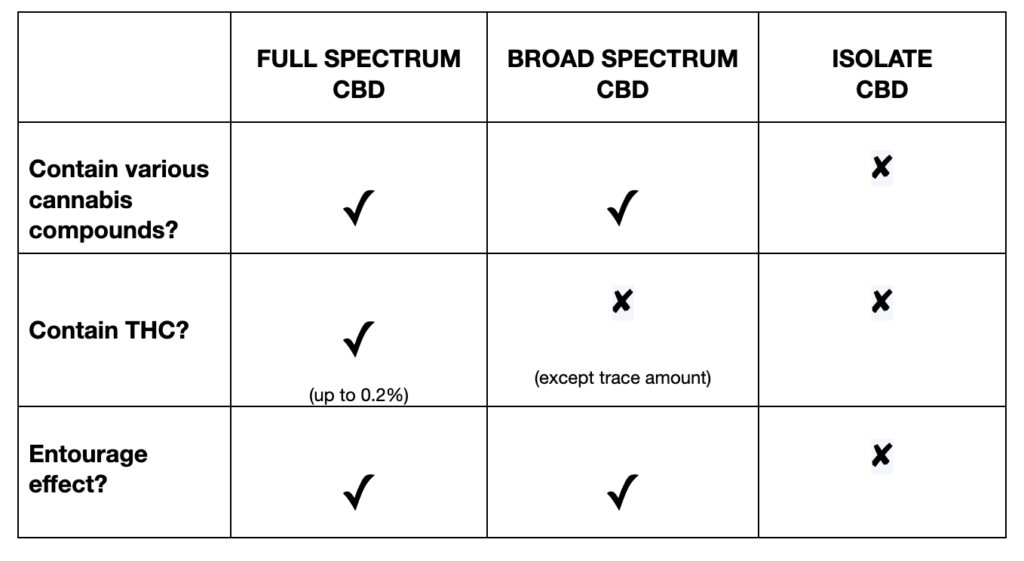
Full-spectrum CBD oil contains not only CBD but also other naturally occurring cannabinoids, terpenes, and plant compounds. This includes a small amount of THC, the psychoactive compound in cannabis, though in most hemp-derived products, the THC content is limited to 0.3% or less to comply with legal regulations.
The Entourage Effect
One of the main benefits associated with full-spectrum CBD is the “entourage effect.” This term refers to the synergistic relationship between CBD and other compounds in the cannabis plant. Studies suggest that the presence of various cannabinoids and terpenes can enhance the overall effectiveness of CBD by working together to impact the endocannabinoid system more effectively.
In addition to CBD, full-spectrum products may contain other cannabinoids such as:
- THC: In trace amounts, as permitted by law. THC is known for its potential to alleviate pain and anxiety.
- CBG (Cannabigerol): Often referred to as the “mother” cannabinoid, CBG may have antibacterial and anti-inflammatory properties.
- CBC (Cannabichromene): This cannabinoid is being researched for its potential mood-boosting effects and ability to relieve pain.
- Terpenes: These aromatic compounds contribute to the flavor and smell of the product and may provide additional health benefits.
Pros of Full-Spectrum CBD
- Enhanced Effects: Thanks to the entourage effect, many users report that full-spectrum CBD feels more potent and effective.
- Broader Range of Benefits: Full-spectrum products offer the potential benefits of other cannabinoids and terpenes, which may complement CBD’s effects.
Cons of Full-Spectrum CBD
- THC Sensitivity: Some individuals are sensitive to even trace amounts of THC or may need to avoid it due to drug testing concerns.
- Flavor Profile: Full-spectrum CBD oils tend to have a stronger, more “earthy” taste due to the presence of additional plant compounds.
What Is CBD Isolate?
CBD isolate, as the name suggests, is a purified form of CBD that contains no other cannabinoids, terpenes, or plant compounds. Through additional processing and refinement, manufacturers remove everything but the CBD, leaving a product that is over 99% pure cannabidiol.
How CBD Isolate Is Made
The process of creating CBD isolate typically involves extra refinement steps after initial extraction. These steps include:
- Winterization: A purification process that removes any remaining plant fats, waxes, and other impurities.
- Distillation: Further purification to ensure that only CBD remains, resulting in a crystalline powder or fine white powder that is odorless and tasteless.
Pros of CBD Isolate
- No THC: CBD isolate is ideal for people who need to avoid THC completely, whether due to legal restrictions, drug testing, or personal preference.
- Versatility: Since it’s flavorless and odorless, CBD isolate can be added to a variety of products, including foods, drinks, and topical formulations.
- Precise Dosing: With pure CBD, it’s easier to control dosage levels accurately.
Cons of CBD Isolate
- Lack of Entourage Effect: Without the presence of other cannabinoids and terpenes, CBD isolate may be less potent than full-spectrum products, as users miss out on the entourage effect.
- Limited Benefits: While pure, CBD isolate lacks the broad range of effects that other cannabinoids and terpenes might provide.
Which Should You Choose: Full-Spectrum or Isolate?
The choice between full-spectrum and isolate CBD largely depends on personal preferences, health goals, and any sensitivities to THC or other compounds.
Factors to Consider
- Intended Effects: If you are looking for a product with maximum therapeutic potential, full-spectrum CBD might be the better choice due to the entourage effect. However, if you’re only interested in CBD’s properties without additional compounds, isolate is a solid option.
- THC Sensitivity or Restrictions: Those who need to avoid THC due to drug testing or sensitivity concerns should opt for CBD isolate.
- Taste Preferences: Full-spectrum CBD retains natural flavors, while CBD isolate is tasteless. Choose based on your taste preferences or if you plan to mix CBD into foods and drinks.
Potential Uses for Each Type
- Full-Spectrum CBD: Recommended for individuals seeking comprehensive wellness support and those who don’t mind a trace amount of THC. Full-spectrum products are often preferred for chronic pain, anxiety, and inflammation.
- CBD Isolate: Ideal for people looking to add CBD to foods, beverages, or other products without altering the flavor. Isolate is also a good choice for first-time CBD users who want to experience the effects of pure CBD.
Conclusion
Both full-spectrum and isolate CBD oils offer unique advantages and potential benefits, catering to different needs and preferences. Full-spectrum CBD provides the synergy of cannabinoids and terpenes, resulting in the entourage effect, while CBD isolate delivers pure cannabidiol without additional compounds or THC.
When choosing between the two, it’s essential to consider your wellness goals, any THC sensitivities, and your preference for the natural flavors found in full-spectrum products. By understanding the nuances of each type, you can make a more informed decision that aligns with your lifestyle and health objectives. Whether you opt for the comprehensive benefits of full-spectrum or the purity of isolate, CBD can be a valuable addition to your wellness routine.